In brief

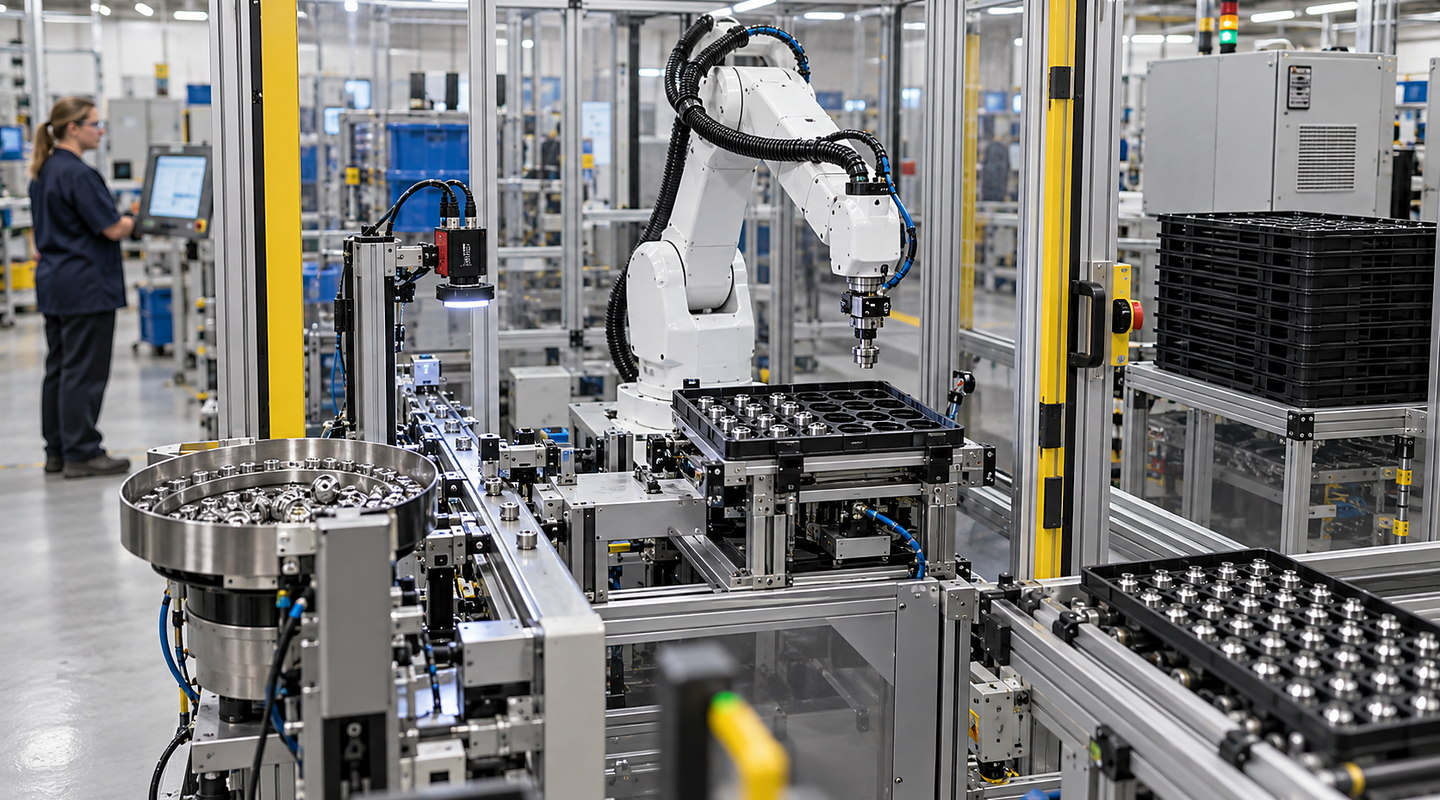
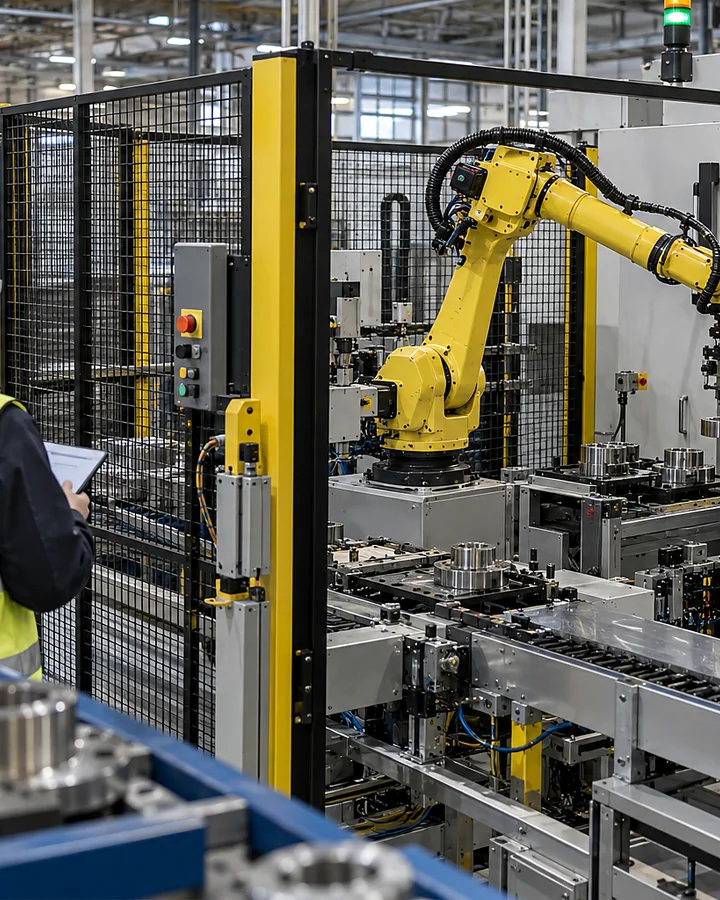
Plan each cycle from arrival of a representative loaded bin through confirmed handling, discharge into the intended opening, completion assessment and return. Include uneven loads, residual material and receiving-process delays, and define the controlled response when emptying is incomplete.

Prepare the bin and contents matrix and normal and interrupted-cycle trials. Reaching a tipping position alone does not establish that the bin met the agreed emptying result.

On the production floor

Plan for the conditions your team handles every day — Robotic Bin Emptying

Plan robotic bin emptying around your parts, process, cycle time, tooling, recovery and acceptance criteria. Discuss the highest-risk feasibility questions with Oxford Industrial Automation. For repeatable production using robotic bin tipping and emptying, the deciding details include part, product and process variation for robotic bin tipping & emptying, required cycle and production pattern and run-off criteria and production evidence.

Discuss your application
Your application

Details worth resolving early for repeatable production using robotic bin tipping and emptying

Question 1

Part, Product and Process Variation for Robotic Bin Tipping & Emptying

Provide representative bin variants, dimensions, full weights, contents and permitted gripping features. Include normal and credible uneven-load conditions and the residual material found after ordinary emptying.

Question 2

Arrival Pattern and Presentation

Record how bins arrive, their position/orientation variation and how the intended bin is presented for handling. Include the handover for the returned or emptied bin.

Question 3

Required Cycle and Production Pattern

Define the complete cycle from presentation through discharge, result check and return. Include receiver waiting, replenishment and operator interventions in the production pattern.

Question 4

Tooling, Sensing and Process Interfaces

Map the proposed gripping/tipping route to the receiving opening. Identify tooling, sensing, services and the upstream/downstream states required for each stage.

Question 5

Operator Access, Recovery and Changeover

Agree controlled recovery when discharge is incomplete or the receiver becomes unavailable. Record who reviews a partly emptied bin and authorises the next action, including required access.

Question 6

Run-Off Criteria and Production Evidence

Compare known bin/load cases with the agreed emptying and receiving results. Retain cycle observations, residual material, interruptions and recovery outcomes with the tested configuration.

Your operating cycle

Plan for more than automatic running

Include replenishment, normal production, planned change, short stops, fault recovery, cleaning and maintenance for repeatable production using robotic bin tipping and emptying. A fast automatic step can still leave your team with a slow or awkward overall process.

Prove the result

Test repeatable production using robotic bin tipping and emptying against representative parts, tooling and difficult cycle conditions

Normal production

Run the agreed product or part mix for repeatable production using robotic bin tipping and emptying at your intended operating pattern.

Difficult conditions

Include credible extremes for part, product and process variation for robotic bin tipping & emptying and arrival pattern and presentation.

Fault and recovery

Show how the proposed solution detects a problem affecting repeatable production using robotic bin tipping and emptying, responds safely, informs your team and restarts under control.

Important limits

Be clear about what the trial has shown

Compare with Retrofit or Flexible Cells Involving Robotic Bin Tipping and Emptying if that operating pattern is closer to your application.