Mechanical
Map actual bin dimensions, full loads, permitted gripping features, tooling and the tipping/discharge route. Review the receiving opening, bin return and access against the complete handling arrangement.
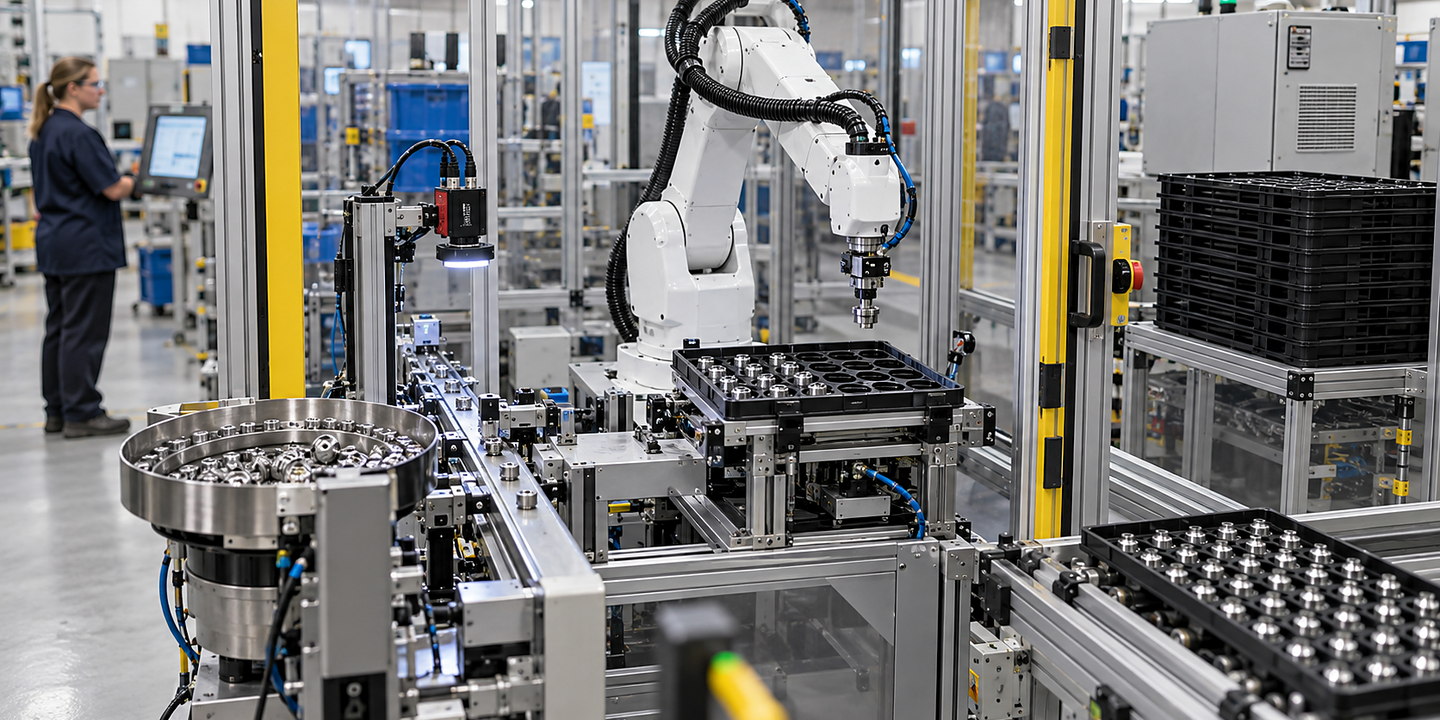
Define bin-emptying interfaces for presentation, tooling, the tipping route, receiving equipment, completion evidence and controlled interrupted-cycle recovery.
Connect bin presentation, handling and tipping to defined receiving-process states and completion evidence. Agree the physical opening and route, tooling and services, control responsibilities, interrupted-cycle response and how a partly emptied bin is identified before another action is authorised.
Use the interface brief and recovery trials. Receiver readiness and an accepted emptying result need explicit criteria; a completed robot path is only one observation in that sequence.
Plan robotic bin emptying around your parts, process, cycle time, tooling, recovery and acceptance criteria. Discuss the highest-risk feasibility questions with Oxford Industrial Automation. Your integration review should connect required cycle and production pattern, tooling, sensing and process interfaces and the people who run the process.
Discuss your application

Map actual bin dimensions, full loads, permitted gripping features, tooling and the tipping/discharge route. Review the receiving opening, bin return and access against the complete handling arrangement.
List proposed supplies, isolation, protective arrangements, services and cable routes for the handling and receiving equipment. Confirm the responsible site teams and external dependencies.
Define presentation, handling, receiver-readiness, discharge and return states. Agree what happens during receiver interruption or incomplete emptying and who authorises the controlled recovery sequence.
Review the complete load-handling, tipping, receiving and access arrangement for this application. Include uneven loads and incomplete-cycle interventions in the responsible assessment; a successful trial is not a safety assurance.
Define the bin/cycle identifiers and observed states needed for run-off and recovery records. Retain result, residual-material and interruption information with the tested settings and authorised actions.
Name who supplies bins, monitors receiver conditions, reviews incomplete emptying and performs approved cleaning/changeover tasks. Document training, escalation and the checks needed before normal production resumes.
For Robotic Bin Emptying, your team can review each stage before the complete installation is put into routine use.
Share representative parts, process observations and cycle data, including the normal range for part, product and process variation for robotic bin tipping & emptying and the difficult arrival pattern and presentation cases.
Compare suitable methods and use focused trials to show how each option performs against required cycle and production pattern.
Connect the equipment to your line, services and controls while resolving tooling, sensing and process interfaces for day-to-day operation.
Confirm operator access, recovery and changeover, then complete and record run-off criteria and production evidence before your operating team takes over.
For your application: check required cycle and production pattern, tooling, sensing and process interfaces, operator access, recovery and changeover, and run-off criteria and production evidence as part of the complete line trial.