Current condition
Record actual bin variants, dimensions, full loads, gripping features and contents, with present arrival and discharge observations. Identify residual material and uneven-load cases needing review.
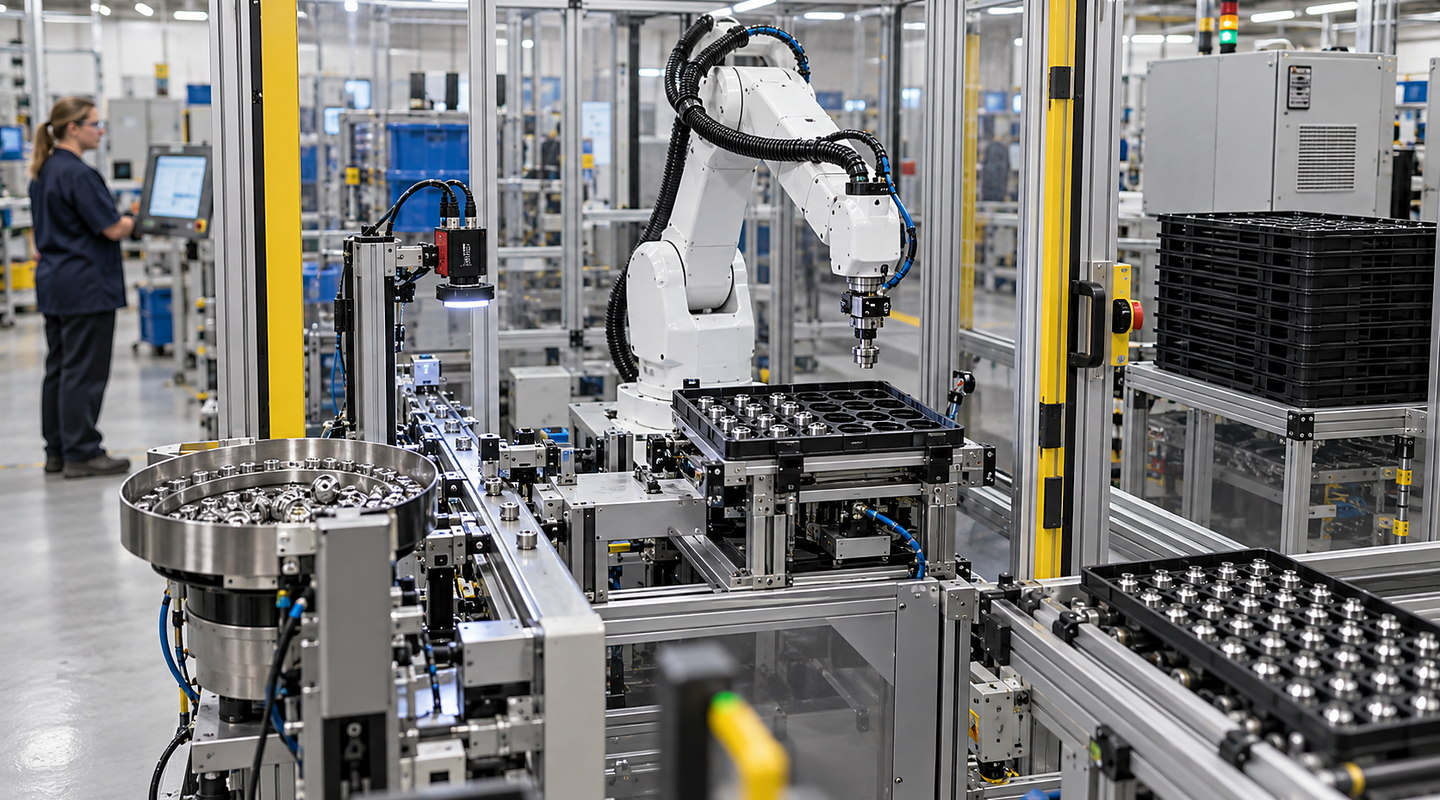
Define bin, load and contents variation for robotic tipping trials, including dimensions, full weight, gripping features, uneven loads and residual material.
Describe the actual bin and load range: dimensions, full weight, permitted gripping features, contents and presentation. Include uneven loading and the residual material seen after ordinary emptying. Trial representative cases against the actual discharge route and receiving opening.
Connect the bin and load matrix to the emptying-result checks. A successful trial with one evenly loaded bin does not establish performance for every bin condition, contents or receiving arrangement.
Plan robotic bin emptying around your parts, process, cycle time, tooling, recovery and acceptance criteria. Discuss the highest-risk feasibility questions with Oxford Industrial Automation. Use this guide to resolve part, product and process variation for robotic bin tipping & emptying before it limits the final system.
Discuss your application
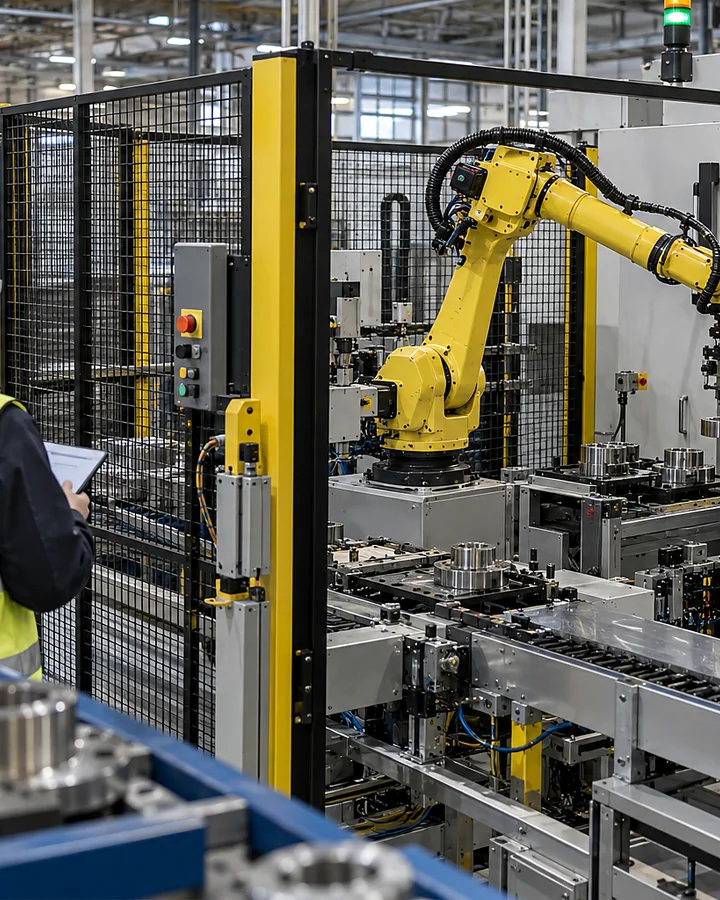
Record actual bin variants, dimensions, full loads, gripping features and contents, with present arrival and discharge observations. Identify residual material and uneven-load cases needing review.
Include the intended bin/contents combinations, ordinary presentation differences, full and uneven loads and receiving conditions. List excluded or untested cases explicitly.
Show how variation affects gripping, transfer, discharge, completion checks and return. Use the observations to define focused trials and controlled incomplete-cycle recovery.
Record the actual dimensions, full weights and permitted gripping features for each bin variant. Identify condition differences and exclusions requiring separate review rather than assuming all bins are equivalent.
Document arrival orientation, position and ordinary presentation variation. Include real bins and current handling observations when assessing whether the proposed grip and transfer can be repeated.
Describe the contents and load distribution, including credible uneven cases. Record discharge behaviour and remaining material alongside the complete cycle rather than only the tipping movement.
Provide drawings of the receiving opening and the proposed movement. Define relevant receiver states and which physical or control interfaces are confirmed or still provisional.
Include partly emptied bins, residual material and interruptions in the trial matrix. Agree controlled recovery, cleaning/changeover access and ownership of exceptional cases.
State the bin/load/contents range tested, repetitions and acceptable outcomes. Keep actual residual-material and receiving results with the configuration, including failures and untested limits.